Just saw this tweet go past on my timeline, and that reminded me. The guys were kind enough to ask me onto the podcast back in August 2019 (Episode 214) as part of their Comic Making Process sessions – episodes 213 – 219 over on podbean etc.
If you are into comics, (particularly if you make them and are based here in the UK) and haven’t heard of the The Awesome Comics Podcast, you really need to check them out. Loads of great critique and advice, across a wide range of comics subjects, styles and genres. Just be careful if listening with your favourite old aunt, she might not be prepared for some of the colloquial language.
There’s also a great Facebook group, again with tonnes of advice, support and a real sense of community for UK comics creators and enthusiasts. Go check it out.
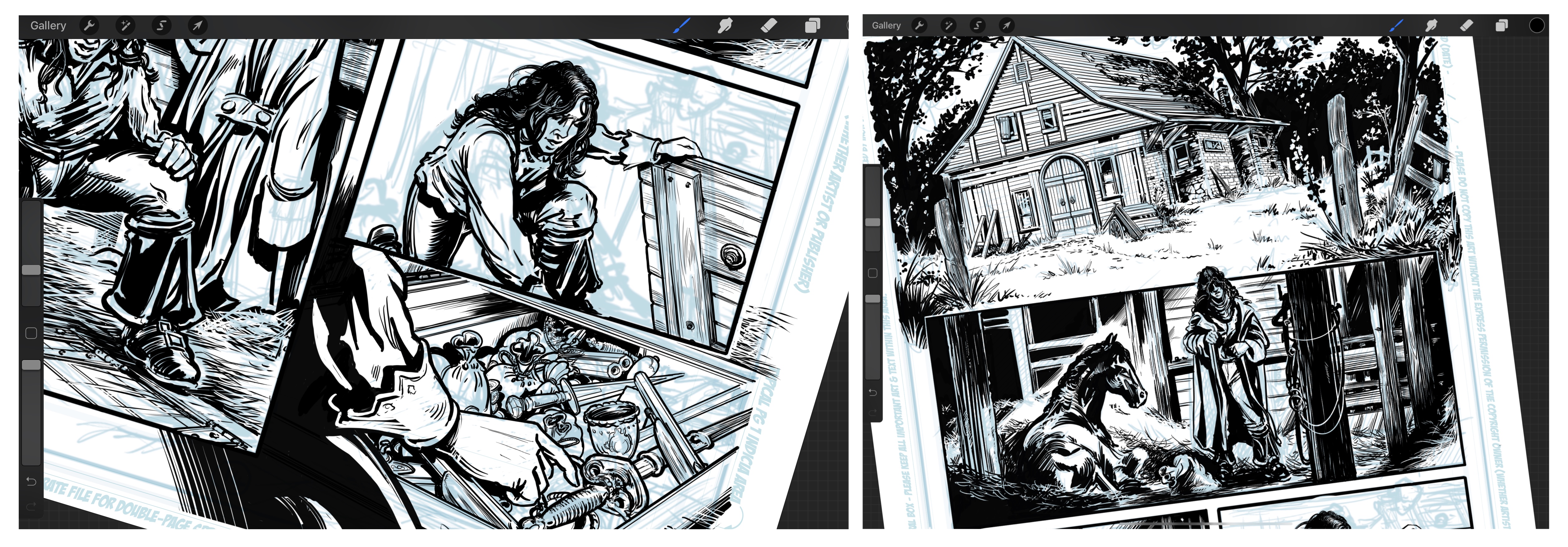
I was pretty happy last year when I was approached to submit an art trial and subsequently be given the task of taking over art duties on Steve Tanner’s “Flintlock” title, found in the historical anthology comic of the same name, published under his Time Bomb Comics imprint (as it stands Book Four is now out in the world, and the script for Book Five is currently in my in-tray).
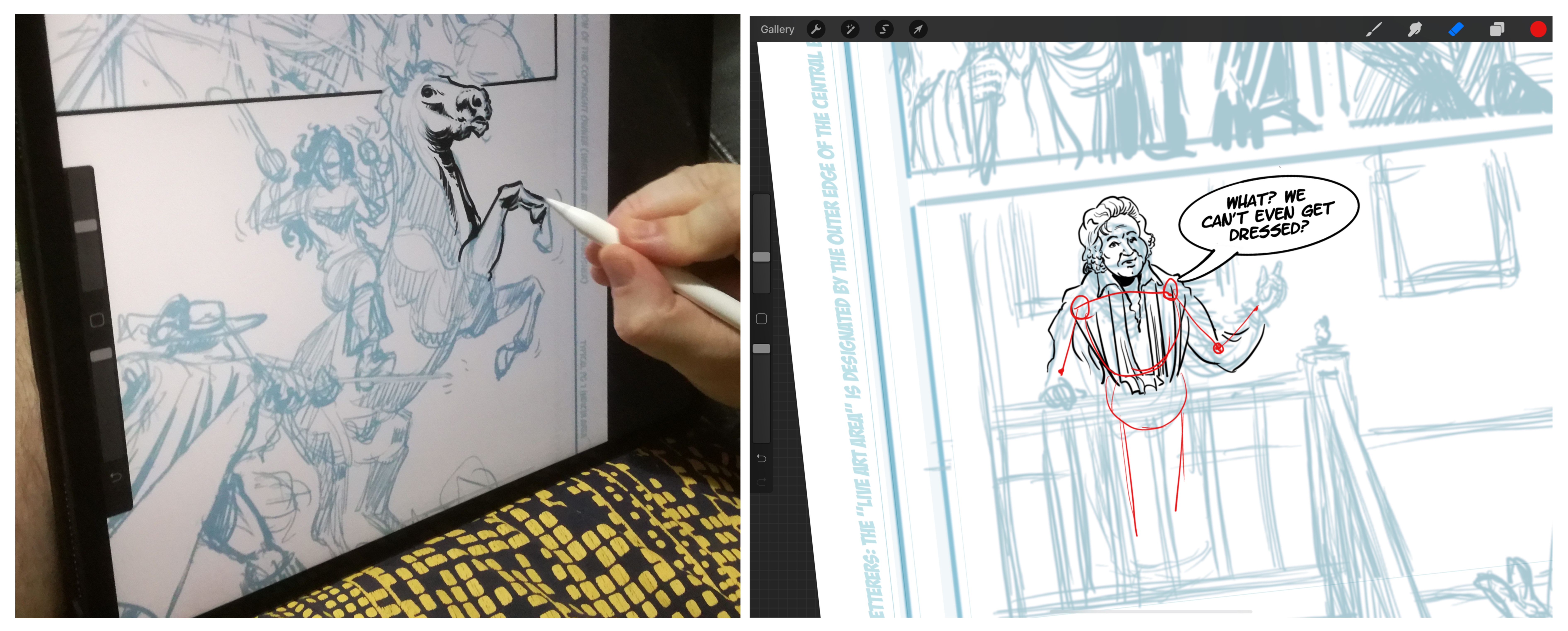
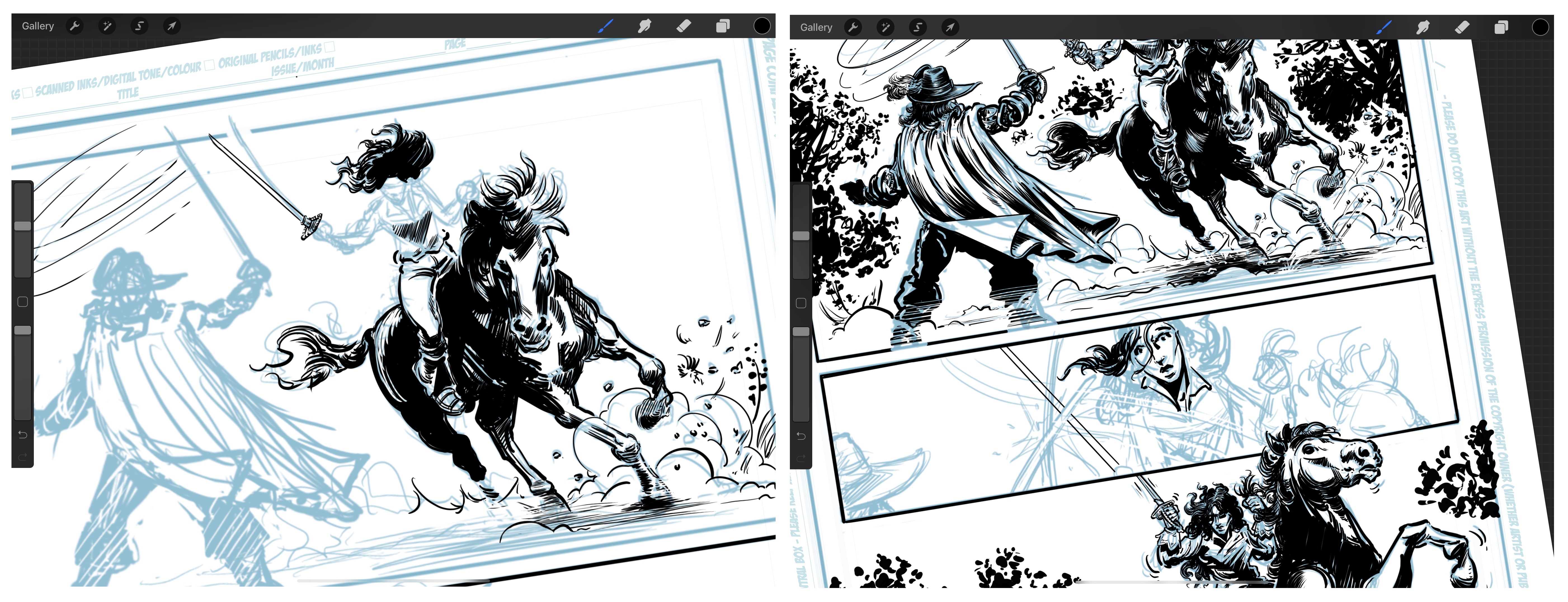
This was the first book I’ve worked on completely digitally, using Procreate fro the entire process from thumbnails through “pencils” and “Inks”. You can see that process in the video below. A real learning curve, but it certainly had its benefits.
If you are not aware, Flintlock follows the adventures and trials of a highway-woman in 18th Century England., the book also features two other female character led historical tales in each issue, with a bunch of other great artists. If you wanted to check it out you can find Steve at many of the major comic con events around the UK, or check it out on his site/store (he has a whole range of similarly historical adventure titles on there too). It is also currently being republished in the pages of Comic Scene magazine, which is available in most WHSmiths, which is cool.
The book has been great to work on despite throwing up some challenges, not least that the predominant mode of transport/travel involves horses, laughs. But I guess an artist just can’t keep avoiding equine anatomy. One big boon is that I already had access to a tricorn hat and a brace of flintlocks.
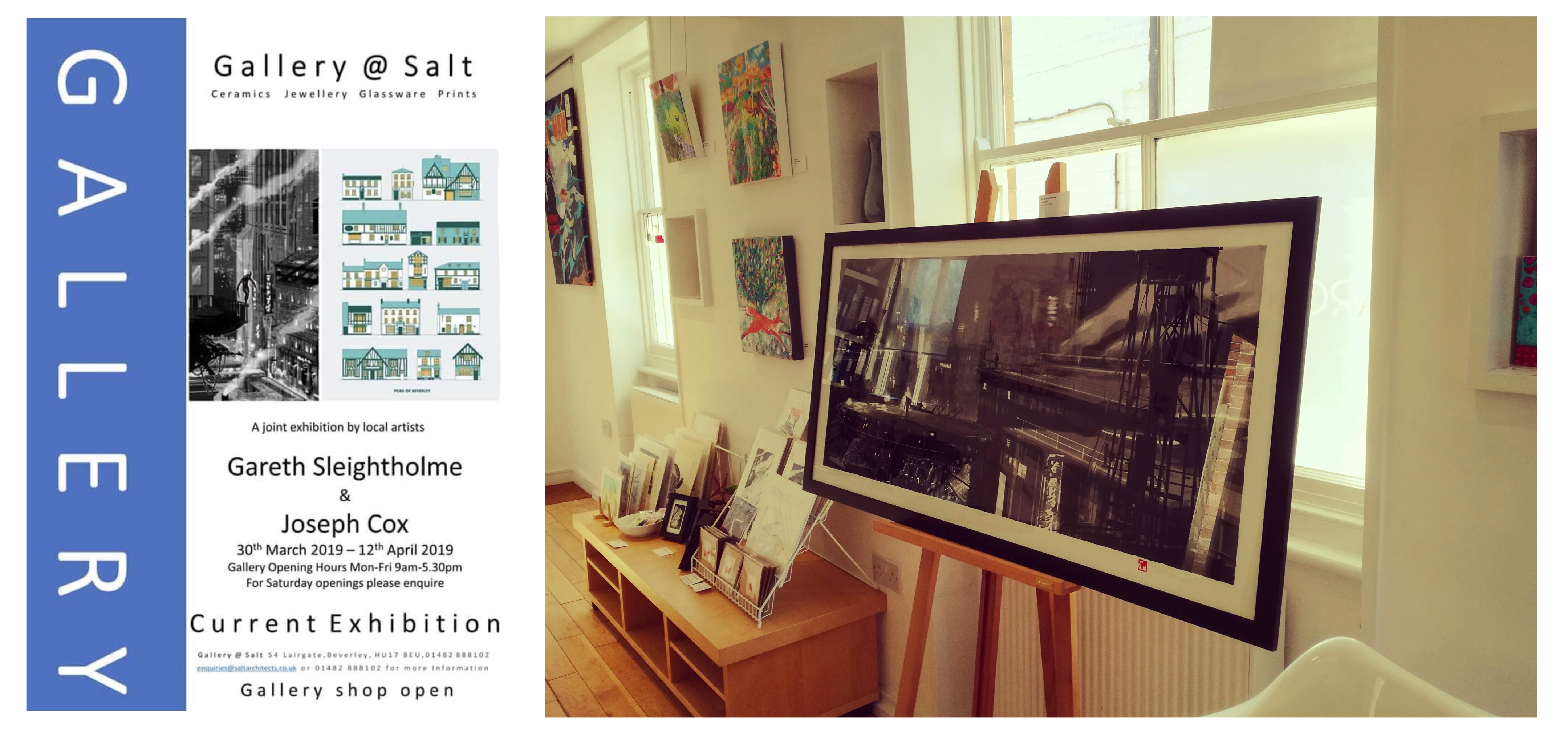
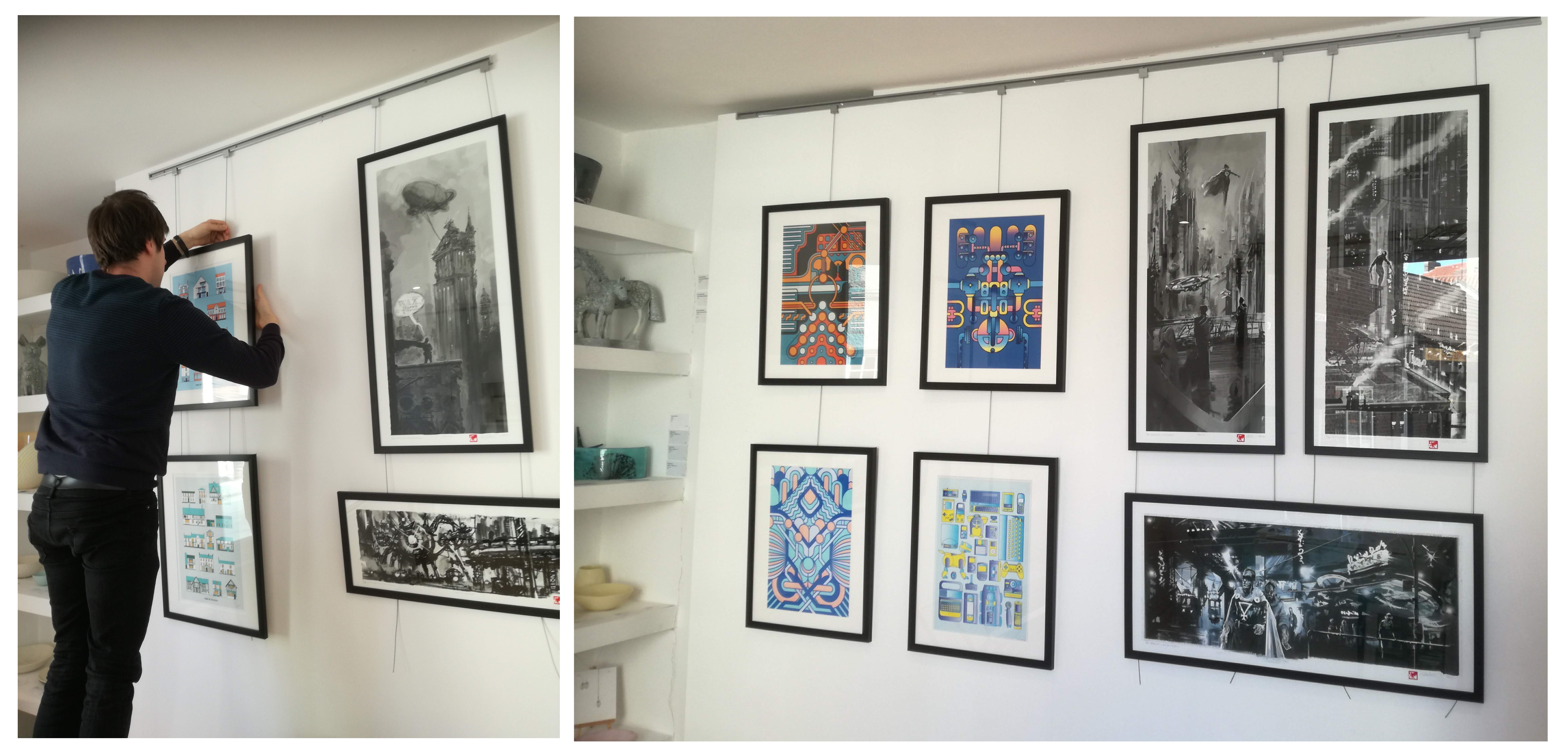
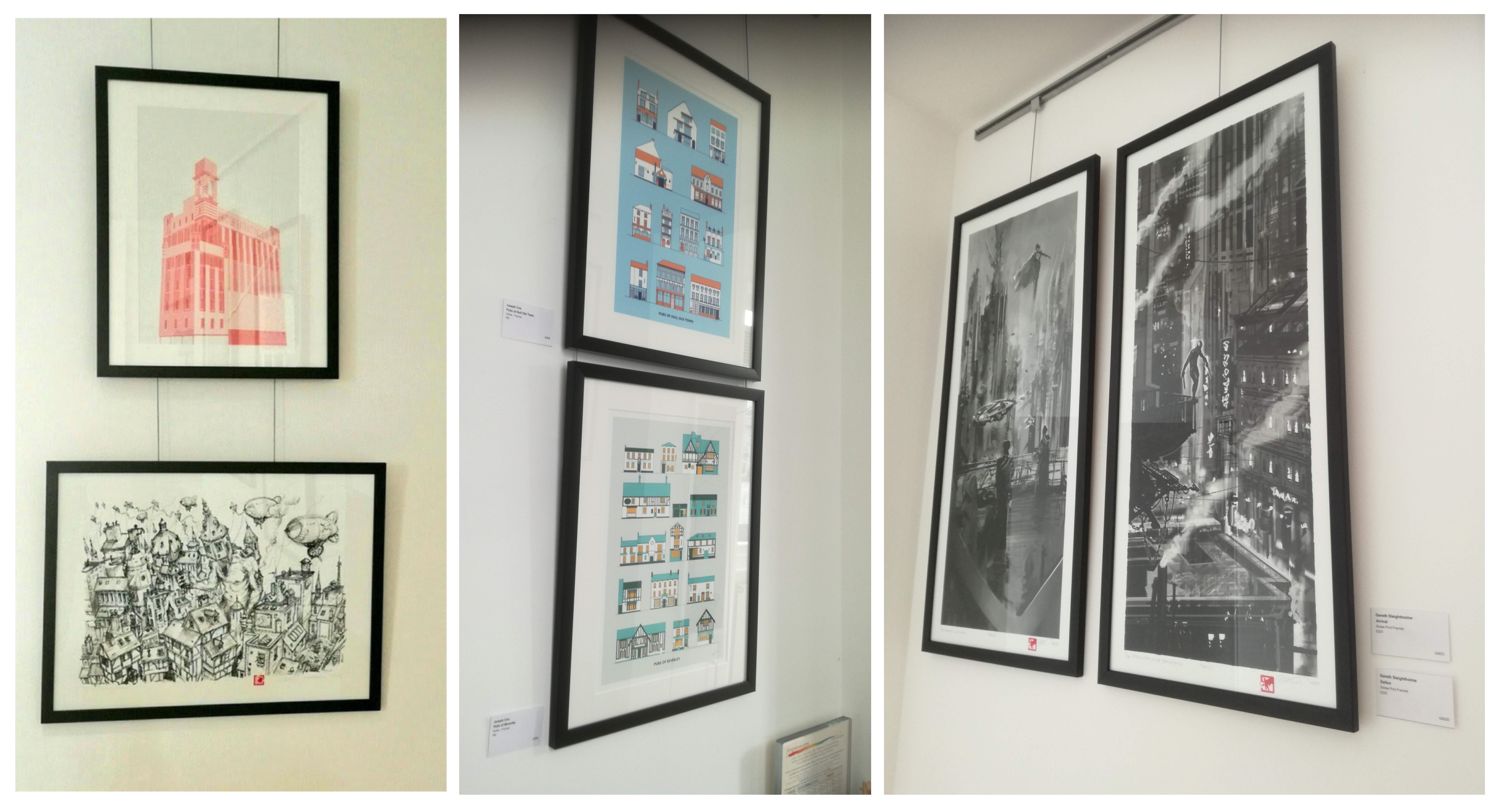
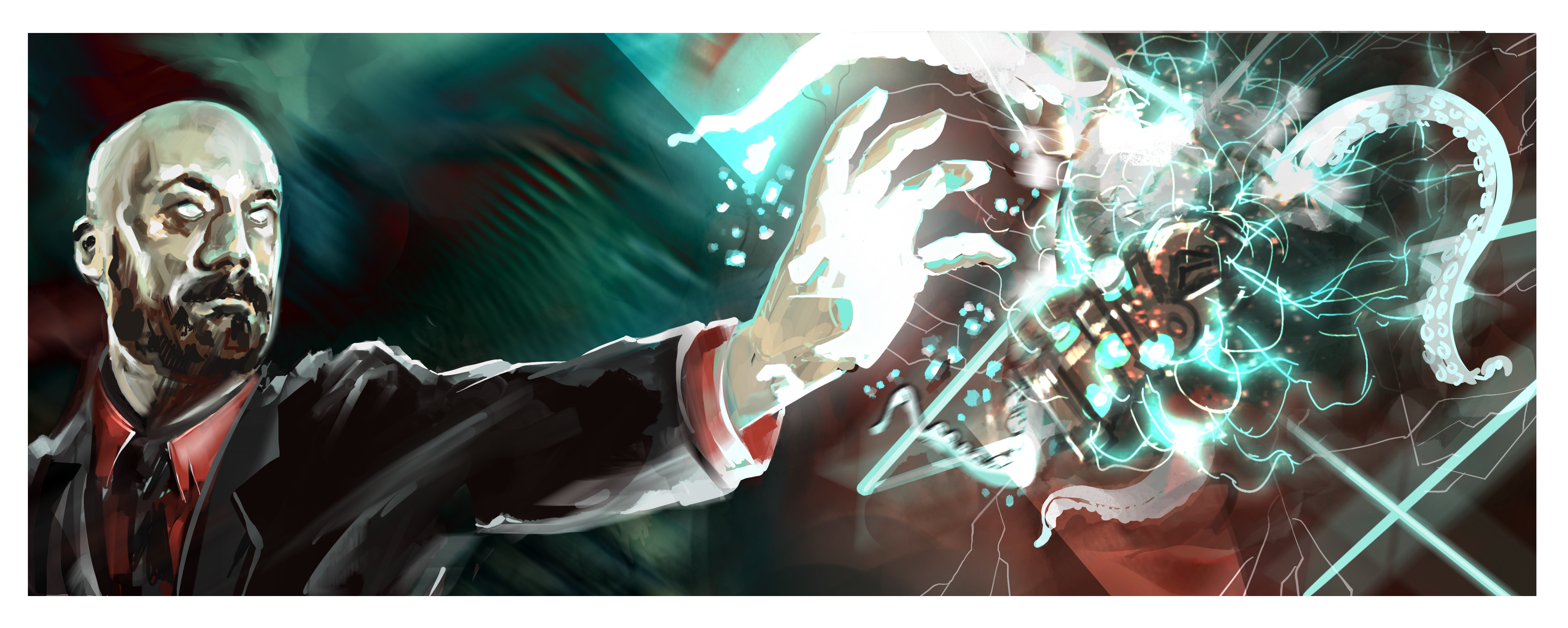
Back in March last year I was asked to show some of my digitally painted comics art and concept art style artwork at a local gallery (Salt, in Beverley) alongside the work of local illustrator and designer (and one of the founders of Form on Humber Street). Joseph Cox.
It was great to show my large format prints for the first time, plus I’d recently created a set of music related prints which I also had in the show.
As different as Joseph’s and my work might be, it was great showing the work together, and strangely both of us seemed to have centred on two themes, i.e. architecture and music, which made the pairing even more relevant.
If you’ve not found it yet, go check out Salt, it’s a great little space with a wide variety of work on show.
The last few months has seen me produce a couple of stretch goal prints for some indie comicskickstarters, I’ve thoroughly enjoyed this. I love making fan art*, and really that’s what this feels like. Being able to dive into the creative world someone else has already brought to life and give it your own spin.
I’d done some of these for the guys at Madius Comics previously which is always great. But being asked by people outside my regular creative collaborative circle was also really cool.
One of these was for Lad, a great new project from Umma Ditta, a strange and really well received folklore meets urban crime drama, about to enter its second Kickstarter push.
*Anyone who has asked me to do fan art commissions at shows, will no doubt think this is odd, as it’s something I usually turn down. I’ve no problem with others doing it, I’m just not that comfortable myself selling stuff based on IPs I don’t have any licences or permissions for. I don’t know why, but that’s the way it is I guess.
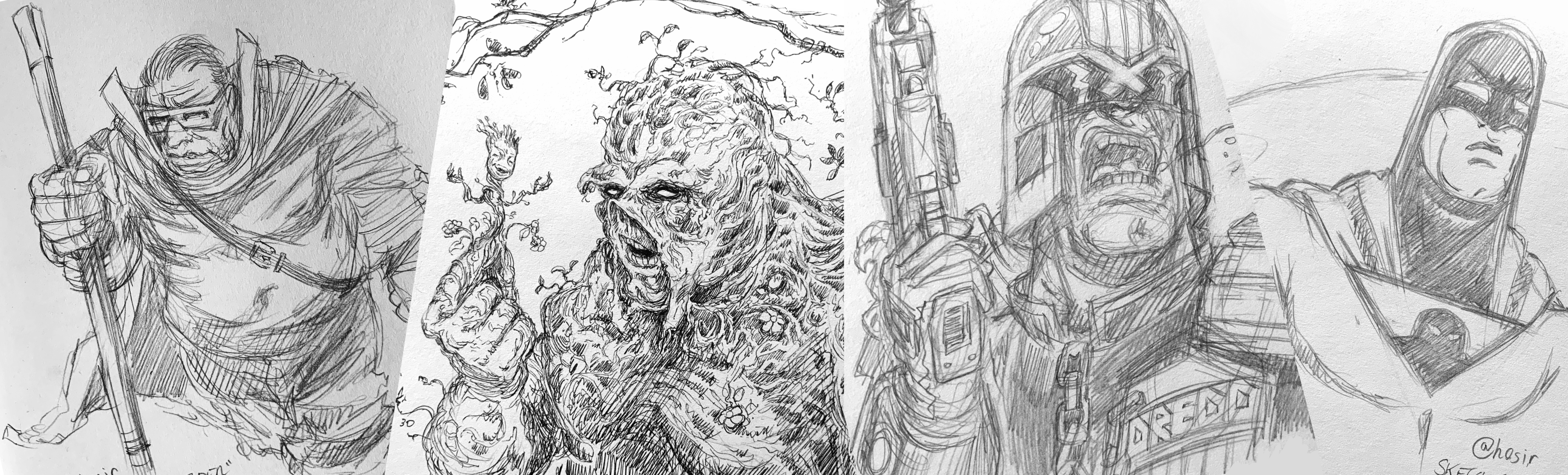
So the fan art I do mostly tends to stay in my sketchbooks or appear as process sketches in my Twitter feed or Facebook, or be the theme of my Inktober etc, but last year there was an opportunity to donate some art to a charity raffle event for Little Heroes. A great charity that donates create your own comic book starter kits for kids in hospital. The event took place at The Two Chairmen in London, and I met up with Andrew Segal and made a day of it, checking out the usual comic stores beforehand (it was coincidentally Free Comic Book Day).
The event itself was also to be the live audience recording of episode 200 of The Awesome Comics Podcast. All of which resulted in a fun comics themed day out. I got to show Vince Hunt the progress on Coldwater Cove (i.e. all the pencilled pages), and we got to chat to a few of the UK indie creators that had come along to donate as well. Top day out.
Anyway, if you are interested, I created a Fan Art Section on here where you can see a bunch of stuff I’ve done over the last few years. Enjoy.
As part of my previous teaching job I occasionally took part in various outreach projects, community collaborations, Kids Drawing Days, gallery projects (video of still above – at 1:53) and other marketing events.
Add to that the various “live art” and Hull Arts Community projects I’ve taken part in, and I really got a taste for that mix of interacting with the public and showcasing design, art work and skill sets etc.
It was always a part of the job I enjoyed, being as close to the comic con experience as you could get, just sometimes in a more formal setting.
It was certainly one of the areas I had been interested in looking into this year as I started to look for new projects and freelance work. I.e. design showcases, or digital or traditional demonstrations, workshops in gallery spaces, at conferences or other similar settings.
And as luck would have it, I was offered some work last year that fell into that area.
First up was a short course for the Feral Art School here in Hull, looking at Creating your own Zines and/or Mini-Comics.
The Feral Art School is a great project, a cooperative educational organisation that started its life without any bricks and mortar spaces of its own and so taught its sessions in “loaned” spaces that had some affinity with the course in question.
So it was with that in mind that we approached Type Slowly (see video above), a great zine store that lives in a shared space with Warren Records Vinyl Store. It’s a space that gets used as a showcase stage for local bands to launch new music and similar events. They have a small amount of seating and a couple of work tables so it was great to be able to run the sessions there.
The course looked at the history of zines and comics, and over six sessions discussed practical approaches to developing your first zine or mini-comic, from selecting topics, looking at narratives, considering aesthetic approaches, in both the creation of original images or choice of reproduction methods. It considered the multiple possibilities for structure in terms of folds, fixings and materials, and encouraged the idea of developing a finished product, printed and ready for sale by the end of the sessions, building in tutorial time into each session to allow discussion of the work being made.
All that whilst being able to just stand up, walk across the room and point at some great examples of the form as reference.
Next up was a two day workshop for a younger audience, again looking at making comics, and built on the back of an excellent exhibition at the Cooper Gallery, Barnsley, that was showcasing the incredible work of comic artist Dean Ormston (Lucifer, Black Hammer) and Pin-up artist Fiona Stephenson (both local artists and still working out of their DC Studios in Barnsley).
The show itself was great, probably the best small exhibition I’ve seen relating to comics. As well as the fantastic array of career spanning work from the two artists, they also had work by other artists from their private collection, both contemporary (Mignola and others), and work going back to the forties. Dean’s Eisner award was on display as were several images showing full process from rough visual through pencils to colour along side the final print reduction. Great stuff.
The two day course covered some basics relating to drawing, character creation, how to keep non-action comics panels interesting, telling stories and creating dialogue. Over the two days, we pulled together a mini-comic anthology with the all the art and dialogue by the kids which was great. We also built in a tour and discussion of the work on show in the gallery which was below the workshop.
As a bonus the gallery asked me to produce a backdrop themed around the comics stylecity skyline we associate with superheroes, as it was to be part of their kids costume/dress up interactive in the gallery.
I was in the middle of a whole bunch of travelling around this time, and had to figure out how to keep working regardless of the inconvenience. The straight line snap tools in the software I was using proved invaluable as we headed to Scotland for the wedding of my wife’s niece at Gretna Green. As I was able to keep working in the back of the mini-bus, regardless of all the bumps and rocking as we travelled.
The whole project was really fun to work on, and what a great little gallery.
The third workshop was a single day seminar, looking at using comics to communicate factual information related to Net-Zero (carbon emissions) at DEFRA in Bristol.
I was one of three speakers including narratologist Dr Genevieve Lively (Senior lecturer in Classics, University of Bristol), illustrator/designer/cartoonist and animator Chris Day (Little Creature), and Dr Sam Cooper. a subject specialist in Net Zero Futures from Bath Uni.
My own input looked at The Nuts & Bolts of Communicating Through Comics, breaking down the elements of a page, how pages work as a whole (composition/flow through panels) and then how they work in a third composition, i.e, together in pairs, including mention the left hand page “reveal” mechanic, and a demonstration of how it is possible to create a multi-modal experience with multiple temporal positions in a single narrative, introduce narrative/concept reinforcing visual metaphors on just a double page spread (created “live” in front of the attendees, see spread above)..
After the individual presentations we helped the attendees develop ideas in comic form based around some of the concepts they worked with (relating to Net-Zero and Futures) and that they had over time found the most difficult to convey through other media. We looked again at holistic visual metaphors, multiple and staggered time-frames, and the physicality of comics and how that effects storytelling.
It was a strange, but without doubt, fulfilling day, working with a great set of attendees, all from highly specialised and unique backgrounds from within DEFRA Futures, external university’s like the University of Bath, Imperial College London and even the MOD.
I’ll hopefully get to work on other projects and workshops of this type as I move forward in this new chapter of my career.